Argostoli
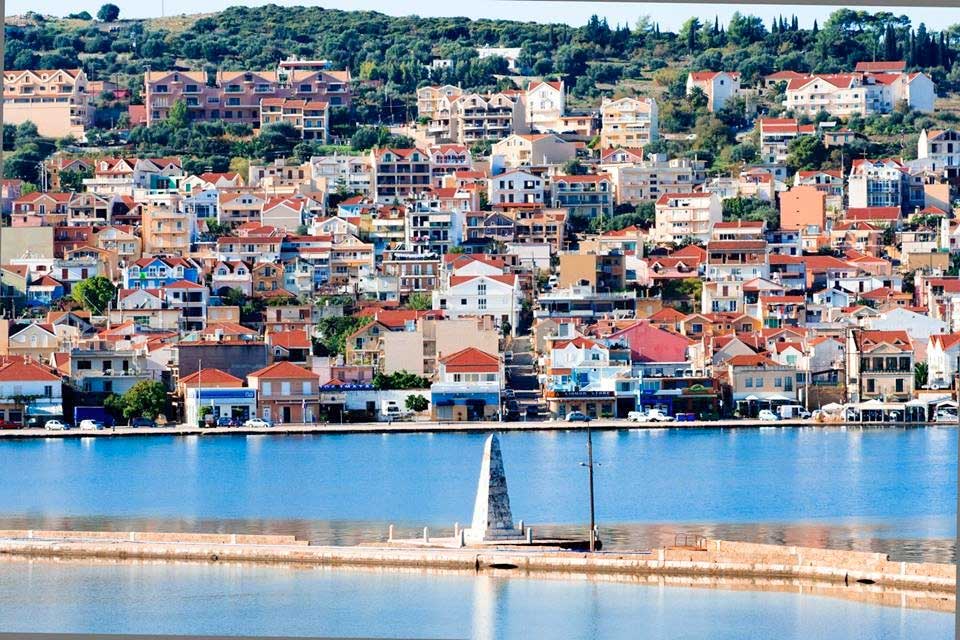
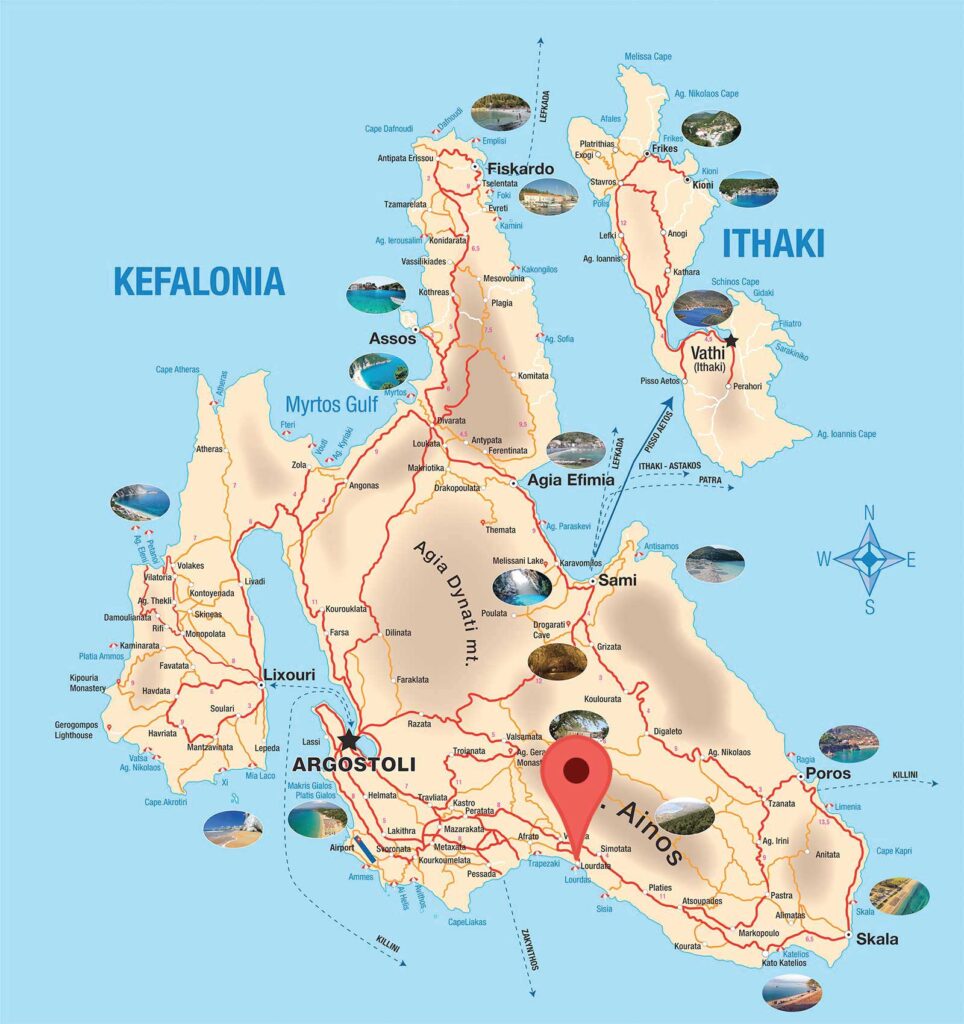
Argostoli: It is the capital of the island. You can visit the Archaeological Museum, Korgialenio Historical and Folklore Museum, Devosetos Bridge, walk along the Lithostroto shopping street where there are many shops to do your shopping and buy souvenirs. On your walk in the harbor you can see sea turtles waiting for the fish that fishermen throw from their nets.
Castle of Saint George
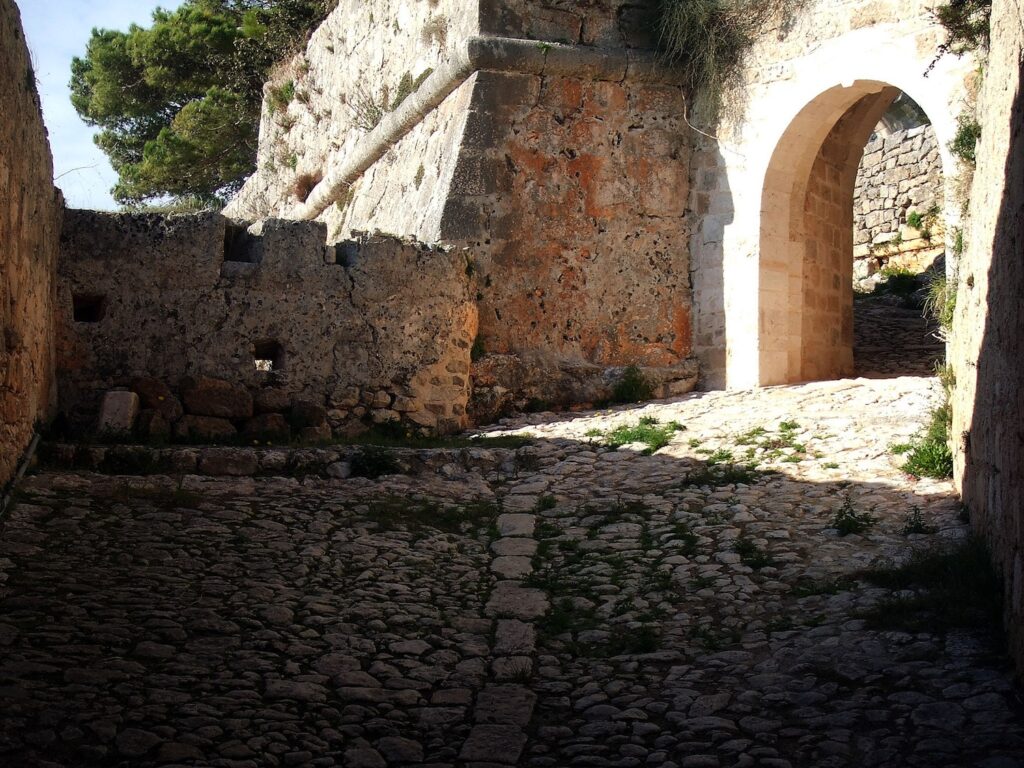
The fortress of Agios Georgios, or Kastro, as it is called today, was the only populous city of Kefalonia from the Middle Ages until 1757. In official Venetian records it is referred to as Città di Cefalonia, meaning City of Kefalonia. Its creation dates back to the twelfth century AD. The Castle of Agios Georgios is one of the important historical sights in Kefalonia. Despite all the damage from the passage of time and seismic vibrations, it stands imposing to this day.
Cave of Drogarati
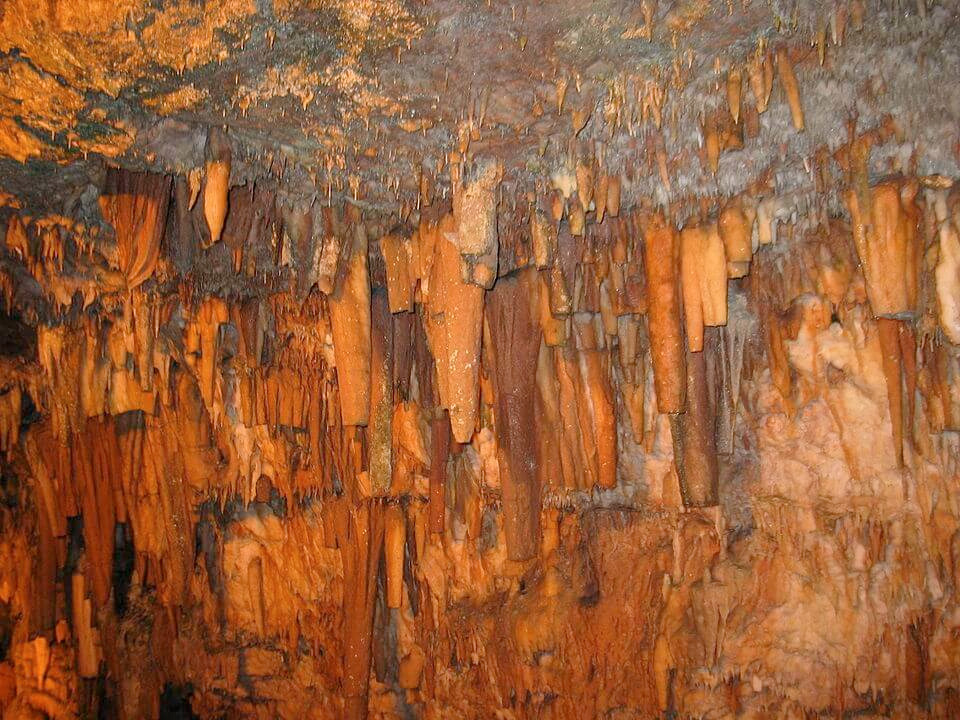
Drogarati cave in the same area as the famous Melissani lake, just 3 km outside Sami. It was discovered only 300 years ago when an earthquake destroyed part of the cave and thus created an entrance. Like Melissani cave, also Drogarati was explored by the speleologist Yiannis Petrochilos and his wife Anna. They entered the cave with ropes and ladders.
Since 1963 Drogarati cave is open to the public. The descending steps lead to a depth of 60 metres where you will be surprised by the cave’s dimensions. It has a size of 65 x 45 metres and a height of 20 metres. In the hot summer months, it is a relief to enter the cool 18*C in the cave.
Melissani Lake Cave
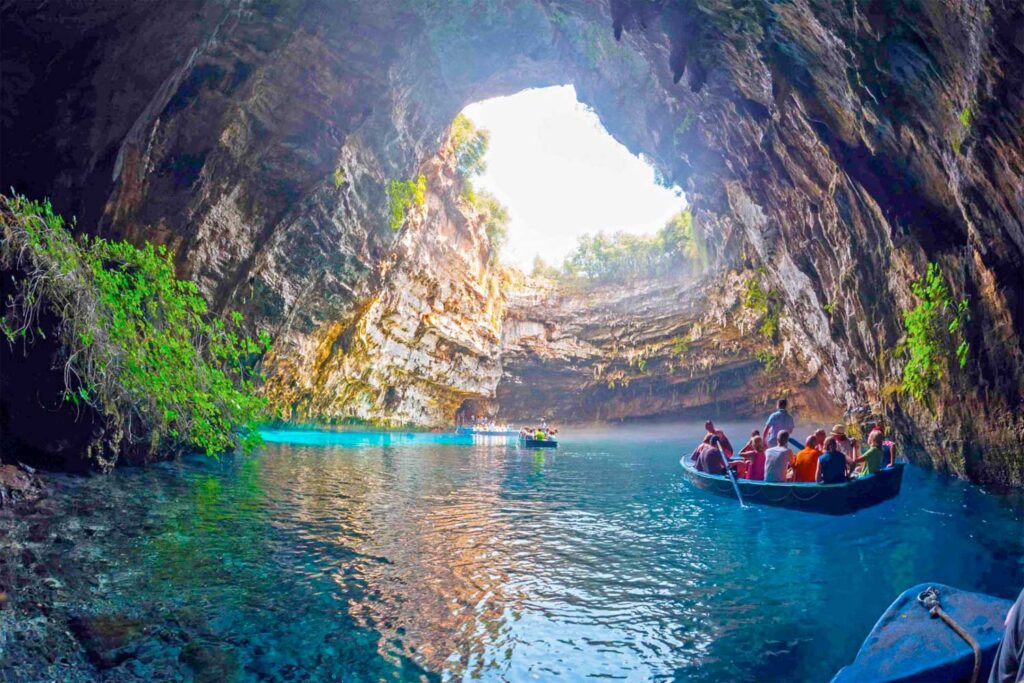
The abyssal lake cave of Melissani is located 2 km. northwest of Sami in Kefalonia. The natural entrance to the cave is vertical, measuring 40 x 50 m. and was created by the collapse of a section of the roof. An artificial entrance with steps and a long underground corridor allows visitors to visit the cave. The lake is located 20 m. below the surface of the ground and the depth of its waters ranges from 10 m. to 30 m. Stalactites with strange shapes decorate the largest part of the cave. The waters of Melissani, according to George A., flow into Agia Efimia.
Myrtos beach
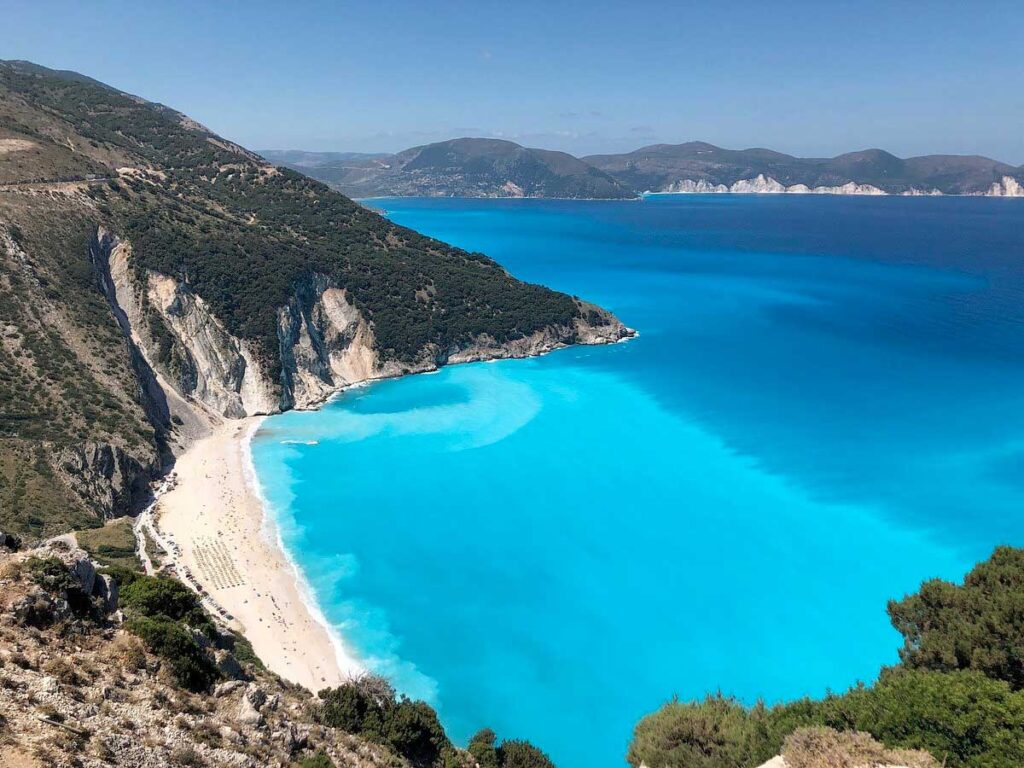
Myrtos Beach or simply Myrtos is a beach in Kefalonia. It is considered the most famous beach on the island and one of its main attractions, since in recent years it has attracted many people. It is located in the northern part of the island, in the Municipality of Pylare, 30 kilometers north of Argostoli. The nearest village is Divarata, 2.5 km south of the beach. It has white pebbles and blue waters due to the currents of the area. The beach is surrounded by cliffs and is approximately 800 meters long. At its edge there is a small cave. The beach has been awarded the Blue Flag and has been voted the best beach in Greece 11 times in a thalassa.gr poll, more than any other beach. Myrtos is an organized beach, with a canteen, umbrellas, sunbeds and a lifeguard. The beach is dangerous because, as an open bay, during bad weather, large waves appear, and many swimmers have died. The beach hosts the Cultural Summer, a music festival, every August.
Assos
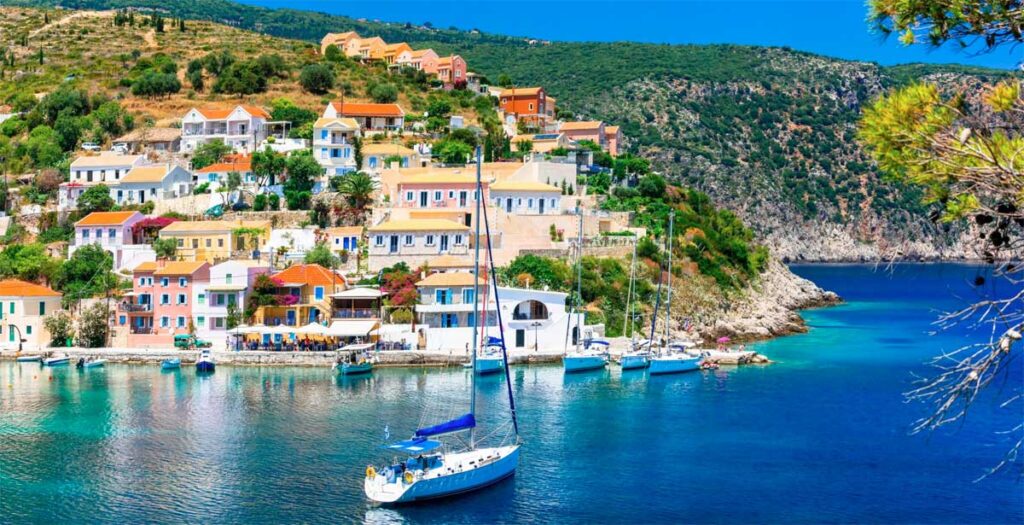
Assos, is a small seaside village in the regional unit of Kefalonia, In the northern part of Kefalonia, a small, colorful village seems to “step” on a narrow strip of land, about 50 meters wide, which runs along the sea. It is built at an average altitude of 20 meters above sea level, at a road distance of 40 kilometers north of Argostoli.
Fiskardo
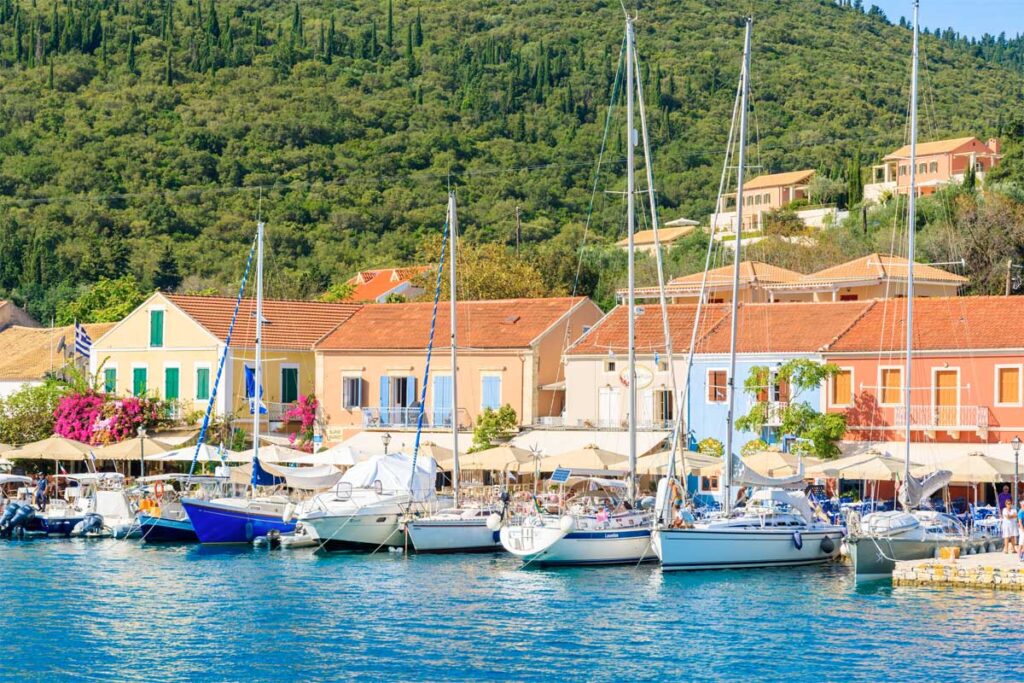
Fiskardo is a seaside village in northern Kefalonia, at the closest point of Kefalonia – Ithaca. Fiskardo has been classified as a traditional settlement. It is one of the few villages on the island that retains its old architectural character, as it was not seriously damaged by the devastating earthquake of 1953. It took its name from the Norman conqueror Robert Guiscardo, who besieged the area in 1085. It is the birthplace of the poet Nikos Kavvadias. Fiskardo is a popular tourist destination during the summer season.